DIY Power Washing vs Hiring a Professional: Cost Compared
If you own a home in Melbourne Bayside, you already know how quickly the elements take their toll. Salt-laden sea air, coastal humidity, bird droppings, pollen, moss and the occasional stretch of wet weather all https://penzu.com/p/abe3ea2b250b67dc leave their mark on driveways, roofs, fences and walls. Sooner or later, most homeowners in Brighton, Sandringham, Black Rock, Beaumaris, Mentone and surrounding suburbs ask the same question: should I hire a hand-held pressure washer and do it myself, or call a professional?
The answer depends on more than the sticker price. This guide breaks down the real costs of DIY power washing versus professional pressure cleaning in 2026, including equipment, time, water use, risk and results, so you can make a confident decision for your property.
Understanding the Terminology: Power Washing vs Pressure Washing
The terms power washing, pressure washing and pressure cleaning are often used interchangeably in Australia. Strictly speaking, power washing uses heated water, while pressure washing uses cold water at high pressure. Most Australian residential work is done with cold water, and "pressure cleaning" is the most common local term. Whatever you call it, the goal is the same: remove dirt, mould, algae, grease and grime from hard surfaces without damaging them.
The True Cost of DIY Pressure Washing
On the surface, DIY looks like the cheaper path. But the total cost includes more than the machine itself.
Buying a Pressure Washer
Prices in 2026 vary widely depending on power and build quality:
- Entry-level electric models (1,500 to 2,000 PSI): roughly $150 to $350. Fine for cars, outdoor furniture and light patio cleaning, but slow and underpowered for heavily soiled concrete.
- Mid-range electric or petrol models (2,000 to 3,000 PSI): roughly $400 to $900. Better suited to driveway cleaning and larger areas.
- Heavy-duty petrol models (3,000+ PSI): roughly $900 to $2,000 or more. These are powerful but also more dangerous to inexperienced users and easy to misuse on softer surfaces.
Hiring a Machine Instead
If you don't want to buy, equipment hire from a local hardware or tool hire outlet typically costs around $70 to $130 for a half day and $100 to $200 for a full day, depending on the machine. This is a sensible option for a one-off job, but remember that you still need to pick up and return the machine.
Extra Costs That Add Up
- Surface cleaner attachment (for even results on driveways): $60 to $250
- Detergents, degreasers and mould treatments: $30 to $100
- Extension hoses, nozzles and safety gear (eye protection, closed shoes, gloves): $40 to $120
- Sealer, if you want to protect the surface afterwards: $80 to $300 or more
- Water usage and fuel or electricity
Realistically, a homeowner doing a single driveway and some paths can spend $200 to $500 on a DIY job once hire fees, chemicals and accessories are included. Buying a quality machine and attachments can push the first-year cost well past $700.
The Value of Your Time
Time is the cost most people underestimate. A typical double driveway can take three to five hours with a standard pressure washer, especially without a surface cleaner. Add set-up, cleanup, and a second pass for stubborn stains, and a full house wash, paths, and alfresco area can swallow an entire weekend. If you value your weekend at even $30 an hour, that adds a significant hidden cost.
The Cost of Hiring a Professional
Professional rates in Melbourne Bayside vary by surface type, access, level of soiling and job size. As a general guide for 2026, homeowners can expect the following ballpark figures:
- Driveway cleaning: roughly $150 to $400 for a standard residential driveway, depending on size and staining
- House washing (exterior walls): roughly $300 to $900 for a single-storey home, with double-storey homes costing more
- Roof cleaning: roughly $500 to $1,500 or more, depending on roof size, pitch, material and moss or lichen levels
- Patios, paths and pool surrounds: often $150 to $450
- Fences and decks: commonly $150 to $500, depending on length and material
Many professionals offer bundle pricing if you combine services such as house washing, driveway cleaning and roof cleaning in one visit. Quotes are often $50 to $200 lower than booking each service separately, since travel, set-up and equipment costs are shared.
What You Are Paying For
A professional quote usually includes commercial-grade equipment, appropriate chemicals, insurance, experience with different surfaces, and the efficiency of a trained operator. Commercial machines and surface cleaners often finish in an hour what might take a DIYer half a day.
Side-by-Side Cost Comparison
Here is how the two approaches typically compare for a standard Melbourne Bayside home:
- Driveway only: DIY $100 to $350 (hire plus supplies) versus professional $150 to $400
- Driveway, paths and patio: DIY $200 to $500 versus professional $300 to $700
- Full exterior house wash: DIY $150 to $400 plus a full weekend versus professional $300 to $900
- Roof cleaning: DIY often not recommended; professional $500 to $1,500+
For small, simple jobs, DIY can save a modest amount of money. For larger or more complex work, the gap narrows quickly, and for roofs it often reverses once you factor in safety and the risk of costly damage.
Risks of DIY Pressure Cleaning
Saving a few hundred dollars isn't worth it if the job goes wrong. Common DIY problems include:
- Surface damage: Too much pressure can etch concrete, strip paint, gouge timber, loosen mortar and force water behind cladding or weatherboards.
- Streaking: Without a surface cleaner, driveways often end up with visible "zebra stripes."
- Roof damage: High pressure can crack tiles, dislodge granules and drive water under tiles, leading to leaks.
- Injury: Falls from ladders and roofs are a leading cause of serious home maintenance injuries in Australia. High-pressure jets can also cause deep lacerations.
- Chemical misuse: Harsh chemicals can damage garden beds, pets and nearby plants if not diluted and rinsed correctly.
Roof Cleaning: Almost Always a Job for the Professionals
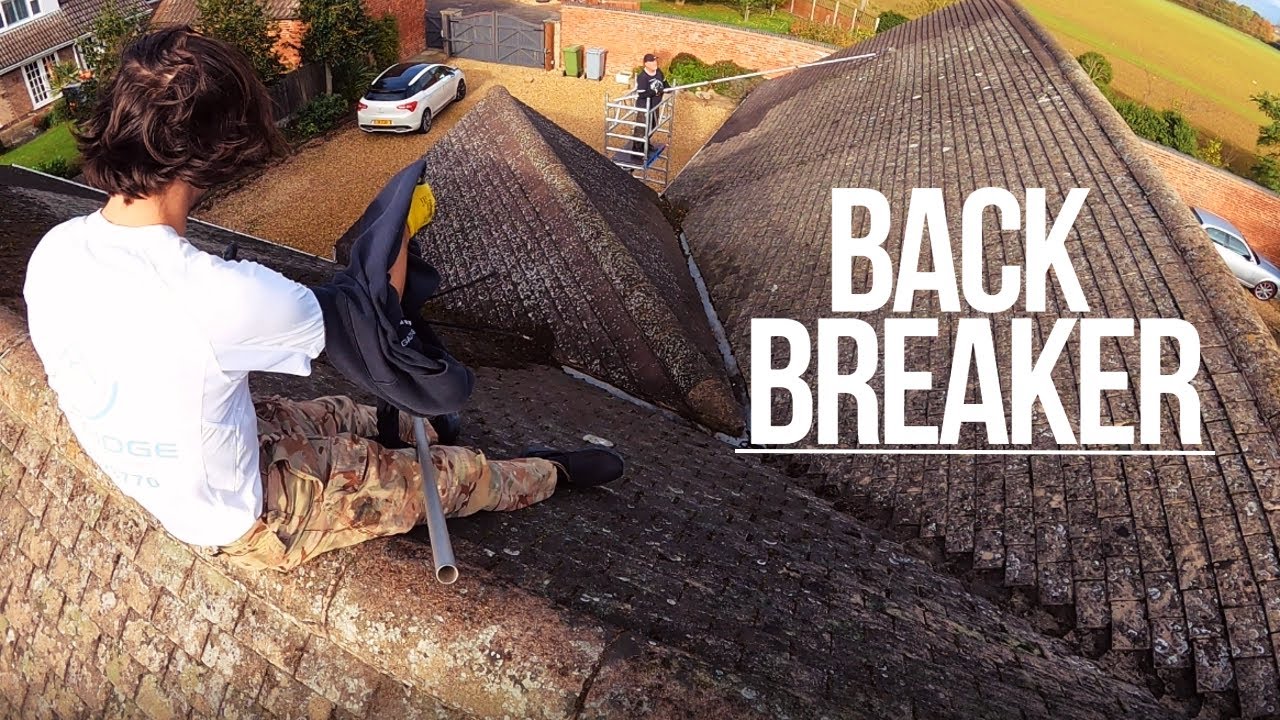
Roof cleaning deserves its own mention. Bayside homes often have terracotta or concrete tile roofs that collect lichen, moss and salt-related staining. Cleaning a roof at height is dangerous, and high-pressure water is rarely the right method. Many professionals use low-pressure washing combined with biocide treatments to kill growth at the source, which helps prevent quick regrowth. Working at height also brings workplace safety obligations for tradespeople, which is one reason insured professionals use proper fall protection. For most homeowners, the cost of a professional roof clean is well justified.

Local Factors in Melbourne Bayside
Several local conditions influence both cost and results:
- Salt and coastal grime: Homes close to the bay accumulate salt deposits that can dull paint and corrode fixings if left too long.
- Water restrictions and runoff: Wash water may carry detergents, oil and sediment. Stormwater drains in Melbourne flow to Port Phillip Bay without treatment, so responsible disposal matters. Professionals often use water containment or recovery methods on certain jobs.
- Council rules: Bayside, Kingston and Glen Eira councils have rules about discharging pollutants into stormwater. It is worth checking your local council's guidance before using chemicals outdoors.
- Heritage and older homes: Many older Bayside homes have soft bricks, lime mortar or aged paintwork that can be easily damaged by high pressure.
When DIY Makes Sense
DIY pressure washing can be a good choice if:
- You have a small, flat, single-storey area such as a path or courtyard
- The surface is durable concrete or pavers in good condition
- You already own a suitable machine
- You have the time and are comfortable learning the technique
When to Hire a Professional
Hiring a professional is usually the smarter move when:
- The job involves a roof, second storey or any work at height
- You are preparing a surface for painting, sealing or sale
- The surface is delicate, old or heavily stained
- You want long-lasting results, not just a quick surface clean
- You would rather spend your weekend elsewhere
How to Get the Best Value from a Professional
- Get at least three quotes and make sure they are itemised so you can compare like for like.
- Ask about insurance including public liability, and confirm they are covered for work at height.
- Bundle services such as house washing, driveway cleaning and roof cleaning to reduce the overall price.
- Ask about methods including pressure settings, chemicals used and how wash water is managed.
- Check local reviews from other Bayside homeowners and ask for before and after photos.
- Book in shoulder seasons when demand is lower, often late autumn or early spring, as summer and pre-sale periods tend to be busy.
How Often Should You Clean?
Regular maintenance reduces long-term costs. As a rough guide for coastal Melbourne properties, driveways and paths benefit from cleaning every 12 to 18 months, house exteriors every one to two years, and roofs every three to five years depending on tree cover and moisture. Staying ahead of build-up means each clean is faster, cheaper and less likely to require aggressive methods.
Final Verdict: Which Is Cheaper?
For a small, straightforward job, DIY can cost less in cash terms, particularly if you already own the equipment. But once you factor in time, the learning curve, the risk of damage and the difficulty of achieving an even, professional finish, the savings shrink. For larger areas, house washing, and especially roof cleaning, professional pressure cleaning is usually better value and far safer.
If you're unsure, the simplest next step is to request a free quote from a local Melbourne Bayside pressure cleaning specialist. Comparing a firm price against your own estimated DIY costs will give you a clear picture, and you may find that a professional job costs less than you expected, with results that last longer into 2027 and beyond.
Bayside Pressure Cleaning Pros
Unit 3/3-5 Arnold St, Cheltenham VIC 3192
ph. (03) 4517 6380